Home or Lab? How to Know Which Sleep Study Is Right for You
Your spouse has started keeping a log of your breathing pauses. It has columns.
You, meanwhile, slept eight hours and woke up feeling as though you'd spent the night being rolled down a hill inside a mattress. You drank coffee. You drank more coffee. At 2:15 p.m. you looked at your computer screen and realized you had been staring at the same email for twenty minutes, and the email was from yourself.
Eventually somebody says the words: "You might need a sleep study."
Good news! You have options. There are two kinds, and you don't pick the one with the better snacks. Your physician looks at your symptoms and medical history and decides which test fits. Here's how they work, who gets which, and how to prepare, so you can nod knowingly at your appointment like someone who totally read a blog post about this. (You did. Congratulations.)
The Home Sleep Apnea Test: Your Bed, Your Rules
A home sleep apnea test is a small, portable device you use in your own bed. You get instructions, you strap on a few sensors, and you go to sleep like a normal person, if normal people sleep while wearing a small gadget and a tiny finger clip.
It typically measures:
• Airflow
• Breathing effort
• Blood oxygen level
• Heart rate
You usually do it for one night, then return the device the next day. It's the Netflix of sleep testing: no travel, no waiting room, and nobody sees your pajamas.
The upsides: You sleep in your own bed. It's convenient to schedule. It often costs less.
The limits: It's designed mainly to detect obstructive sleep apnea. It doesn't measure brain activity or sleep stages the way a lab study does.
That's fine if your situation is straightforward, and not fine if it isn't.
The In-Lab Sleep Study: Camp, But With Wires
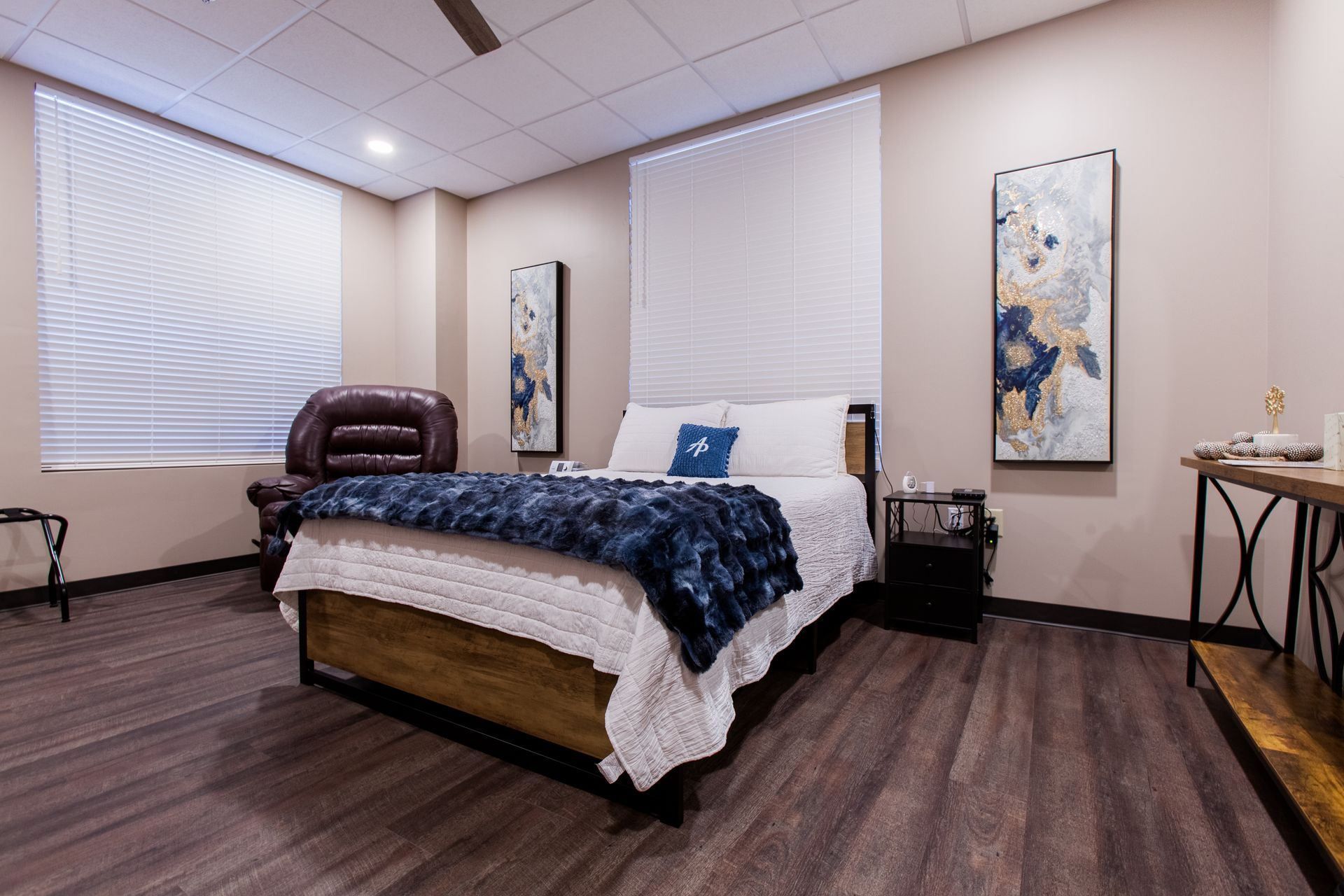
An attended sleep study means an overnight stay in a private, monitored room at a sleep center. Picture a small hotel room where the minibar has been replaced by medical equipment and the "do not disturb" sign is taken very seriously.
A sleep technologist watches over you all night. The study measures a lot more than breathing:
• Brain waves
• Eye movement
• Muscle activity
• Breathing and oxygen
• Heart rhythm
• Body position
Yes, they can tell what stage of sleep you're in. They can also tell whether you're moving your legs, which is how you find out you've been running marathons in your sleep without ever getting a medal.
The upsides: You get comprehensive data, and a human is present. If a sensor slips at 2 a.m., the technologist fixes it, and you don't have to wake up and perform amateur surgery on yourself.
The limits: It's an unfamiliar bed, scheduling is less flexible, and it may cost more.
Home vs. Lab: A Totally Fair and Scientific Comparison
Q. Where does the home test happen?
A. Your bed. Your pillow. Your dog's spot on the bed, which you've never won.
Q. Where does the lab test happen?
A. A sleep center, where a stranger in scrubs will say "Just act natural!" while you lie there wired up like a Christmas tree.
Q. Who's watching?
A. At home, nobody. In the lab, a technologist.
Q. What does it measure?
A. The home test covers breathing, oxygen, and heart rate. The lab adds brain activity and movement.
Q. Which is best for straightforward suspected sleep apnea?
A. Often the home test.
Q. Which is best for complicated or unclear situations?
A. The lab.
Q. Are you a senior citizen?
A. Doesn't matter. Age alone doesn't decide this. Your health history does. (We just wanted to see if you were paying attention.)
Who's a Good Candidate for a Home Test?
A home test generally makes sense if:
• You have a moderate to high likelihood of obstructive sleep apnea
• You have the classic symptoms: loud snoring, witnessed breathing pauses, daytime sleepiness
• You don't have major heart, lung, or neuromuscular disease
• There's no reason to suspect another sleep disorder
• You can follow setup instructions (the device does not come with a teenager to help)
Your provider makes this call, not you. We know the internet says you're an expert, but the internet also says you can fix a lawn mower with a paperclip.
When the Lab Is the Better Choice
Sometimes you need the full-service version. Your provider may recommend an in-lab study if you have:
• Significant heart or lung conditions, such as COPD or heart failure
• Suspected central sleep apnea, narcolepsy, REM sleep behavior disorder, or periodic limb movements
• Long-term opioid use or oxygen therapy
• A negative home test despite symptoms that won't quit
• A home test that didn't record well enough to read
• A need for CPAP titration, in certain cases
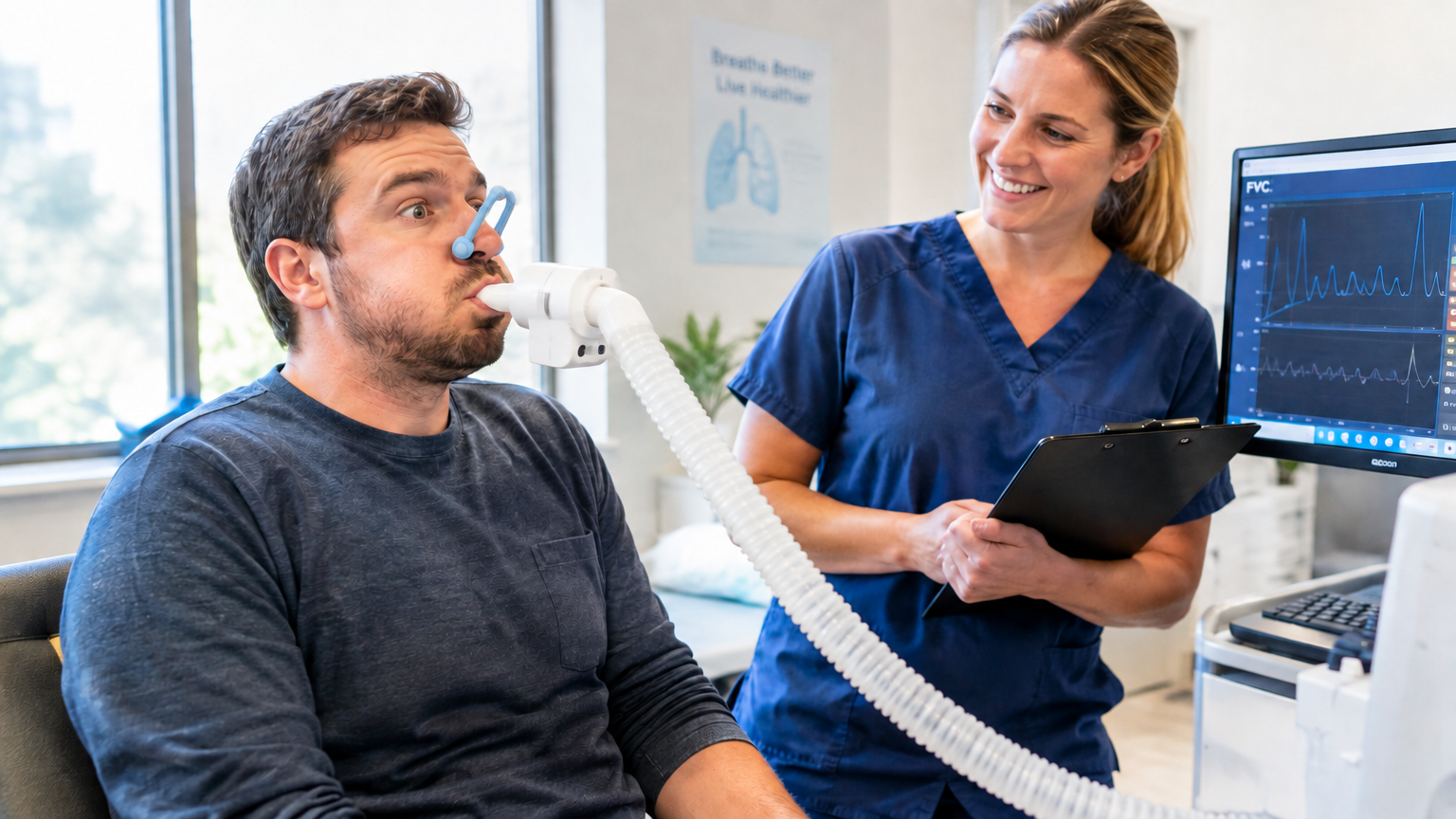
Many of our patients have overlapping lung conditions. If that sounds familiar, our pages on COPD and pulmonary function testing may help.
What If the Home Test Is Inconclusive?
It happens, and it isn't a failure. A sensor slid off. You rolled over like a rotisserie chicken. The recording time was too short, or the results landed in a gray zone.
The usual next step is to repeat the home test or schedule an in-lab study. It's routine. Nobody's disappointed in you. (Except possibly the sensor.)
How to Prepare for Either Test
1. Keep your normal sleep schedule. Don't go to bed at 7 p.m. to "get ahead" of the test. Sleep doesn't work like a savings account.
2. Go easy on late-day caffeine, and skip alcohol that evening. Both can mess with your results.
3. Don't start any new sleep aids unless your provider tells you to.
4. Bathe beforehand, and skip the lotions and oils where sensors will attach. Sensors do not like to be slippery. Who does?
5. For the lab, bring a medication list, your insurance card, and comfortable sleepwear.
6. Follow the specific instructions from our sleep center. They know things. That's why they're the sleep center.
What Happens After the Test?
A sleep physician scores and reviews your data, and the results are discussed at a follow-up visit. Depending on what's found, next steps might include CPAP, an oral appliance, positional therapy, weight management, a referral for surgical evaluation, or further testing. (See our articles on sleep apnea and CPAP Troubleshooting for more.)
Let's Be Serious for a Second
Untreated sleep apnea isn't just a snoring problem. It's linked to high blood pressure, heart problems, and a higher risk of drowsy-driving accidents. It can drain your energy, your focus, and your mood.
The test isn't the scary part. Not knowing is. If you've been blaming the coffee, the weather, or "just getting older" for months, please let us help you find the real answer.
When to Call Us
Reach out to Athens Pulmonary & Sleep Medicine if you notice:
• Loud, frequent snoring
• Breathing pauses someone else has witnessed
• Waking up gasping or choking
• Persistent daytime sleepiness
• Morning headaches
• Trouble concentrating or drowsiness while driving
FAQ
Is a home sleep test as accurate as a lab study?
For the right patient, it can be very reliable for diagnosing obstructive sleep apnea. It can miss other sleep disorders, which is why your provider chooses the test carefully.
Will my insurance cover a home sleep test?
Coverage varies by plan, and some require prior authorization. Our team can help you figure out what applies to you.
Can I choose which test I want?
You can tell us your preference, and we'll listen. But your provider recommends the test based on your symptoms and health history, because the right test gets you the right answer.
Ready to Get Some Real Sleep?
Not sure which sleep study you need? Contact Athens Pulmonary & Sleep Medicine in Athens, Georgia, to talk through your symptoms and testing options with our sleep medicine team.
Your spouse will thank you. Their log has been running for months.