So You Snore Like a Chainsaw Falling Down a Staircase: A Guide to Sleep Apnea
I want to tell you about the night my wife filmed me sleeping.
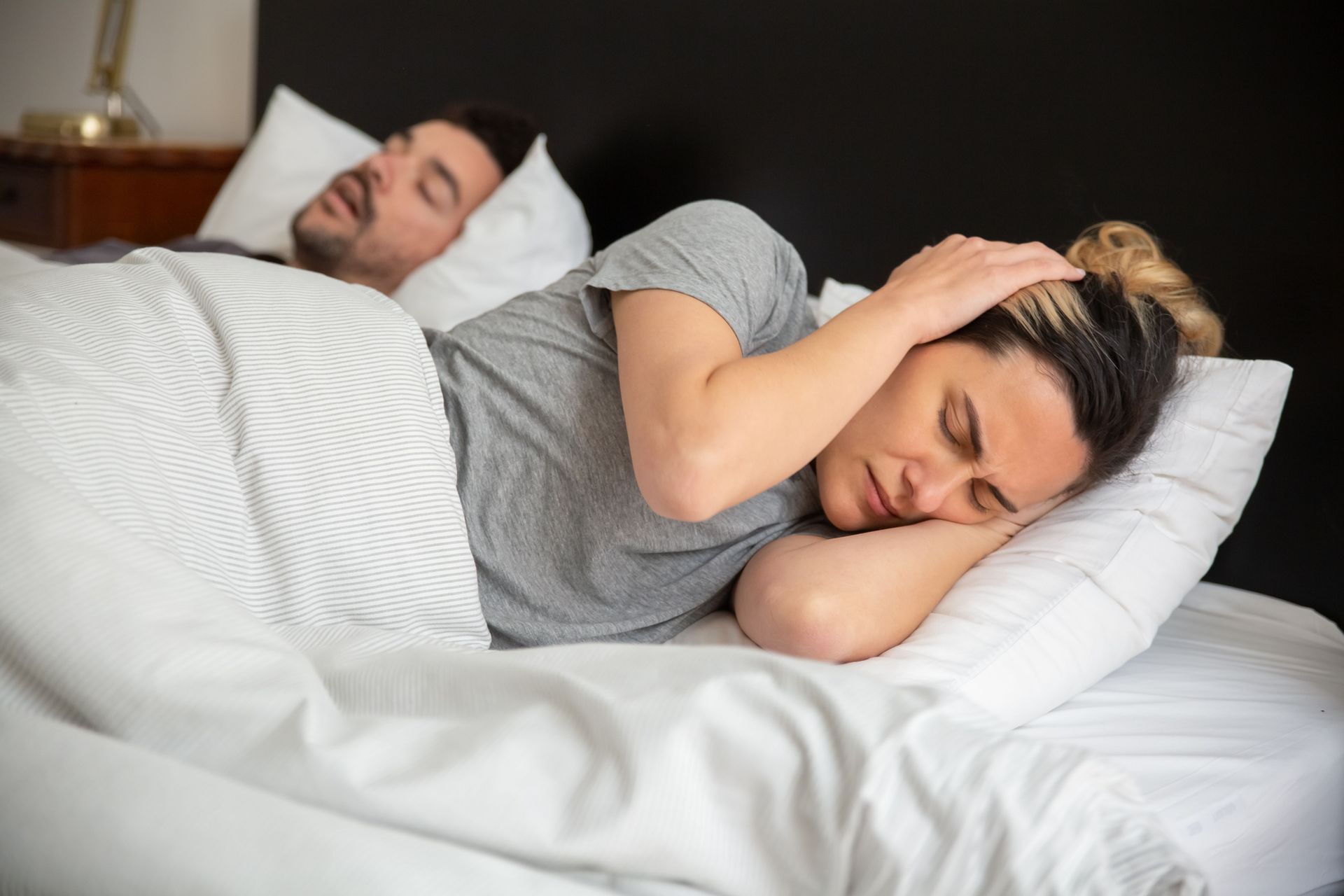
She did not do this because she is a filmmaker, or because we were making some kind of tender home movie for our anniversary. She did it because she wanted proof, admissible in a court of law, that the sound coming out of my face at 2 a.m. was not, as I had long claimed, "just a little snoring." It was, she said, "a sound like a dump truck backing over a family of geese." She showed me the video. I watched myself stop breathing. Then I watched myself gasp, snort, thrash slightly, and resume breathing, all without waking up, while she lay next to me fully awake and reconsidering her vows.
This, it turns out, is a real medical condition, and not — as I had hoped — a personality quirk. It is called obstructive sleep apnea, and if you have ever been elbowed awake by a loved one who is holding up a phone with a video on it, you may have it too.
Here is what is actually happening, minus the marital drama. When you have sleep apnea, the soft tissue in the back of your throat relaxes during sleep and partially or completely blocks your airway. Your brain notices you have stopped breathing — a thing brains tend to feel strongly about — and jolts you into a lighter stage of sleep just long enough to reopen the airway. Then you drop back into deep sleep, and the tissue collapses again, and the whole cycle repeats. Some people do this five times a night. Some people do this over 30 times an hour. I am not making that up: a person with severe sleep apnea can stop breathing more times in one night than I have finished a home improvement project in my entire life, which is zero.
You would think all this gasping and jolting would wake a person up. It does not, not really — which is the cruel genius of the disease. You sleep through the whole production, get eight hours of what you believe is sleep, and then spend your day feeling like a raccoon that has been shot with a tranquilizer dart but only a little bit.
The Symptoms, As Explained By People Who Are Not You
Sleep apnea has a public relations problem, in that the person who has it is the last to know. Below, for accuracy, is a straight-faced Q&A featuring the two authorities who actually know what's going on: your bed partner, and your own exhausted body.
Q: How will I know if I have sleep apnea?
A: You probably won't. But the person sleeping next to you will know immediately, will know at 1 a.m., 2 a.m., and 4 a.m., and will eventually know it well enough to describe your snoring in geological terms ("like tectonic plates").
Q: Are there other symptoms?
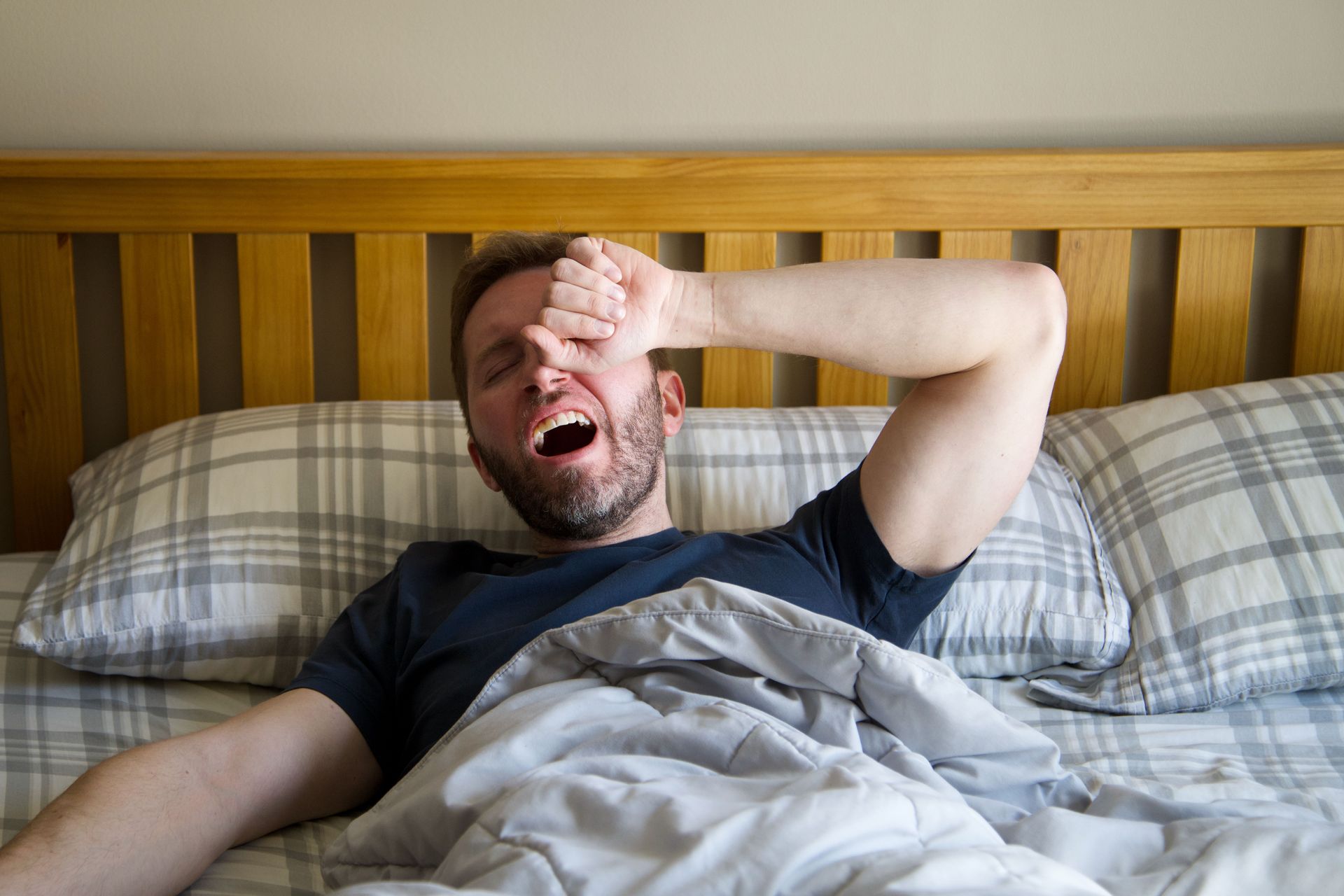
A: Yes. Waking up with a headache, as though your skull filed a complaint overnight. Waking up with a throat so dry you sound like a haunted door hinge. Falling asleep at your desk, in your car at red lights, or — and I say this with love, on behalf of every pulmonologist who has heard this exact story — during your own child's dance recital.
Q: Is daytime sleepiness really that big a deal?
A: According to actual research, drowsy driving contributes to tens of thousands of crashes every year, and untreated sleep apnea is one of the more common medical reasons a person nods off behind the wheel. So yes. It is that big a deal.
Q: What if I just push through it with coffee?
A: You can absolutely try this. Millions of Americans do, forming a proud, bleary-eyed brotherhood that treats caffeine less like a beverage and more like a life-support system. It does not fix sleep apnea. It just makes you a more jittery, more caffeinated version of a person who still isn't breathing properly at night.
Why This Is More Than a Snoring Problem
I want to pause the jokes here for one paragraph, because this next part matters and I am not going to be cute about it.
Every time your breathing stops, your oxygen level drops and your heart has to work harder. Do that dozens of times a night, for years, and the strain adds up. Sleep apnea is linked to high blood pressure, heart disease, stroke, type 2 diabetes, and — because the body is nothing if not thorough — a general fraying of your mood, memory, and patience for other human beings. This is a real medical condition with real consequences, and the fact that it comes packaged with funny snoring stories does not make it less serious. It just makes it more fixable if you actually deal with it, because, unlike a lot of things in medicine, this one has excellent, well-tested treatment options.
Which brings us to the good news.
What Actually Happens If You Get This Checked Out
You do not have to figure this out alone at 3 a.m. while your partner films you for evidence. Here, in the spirit of full disclosure, is roughly what happens if you come talk to us about it.
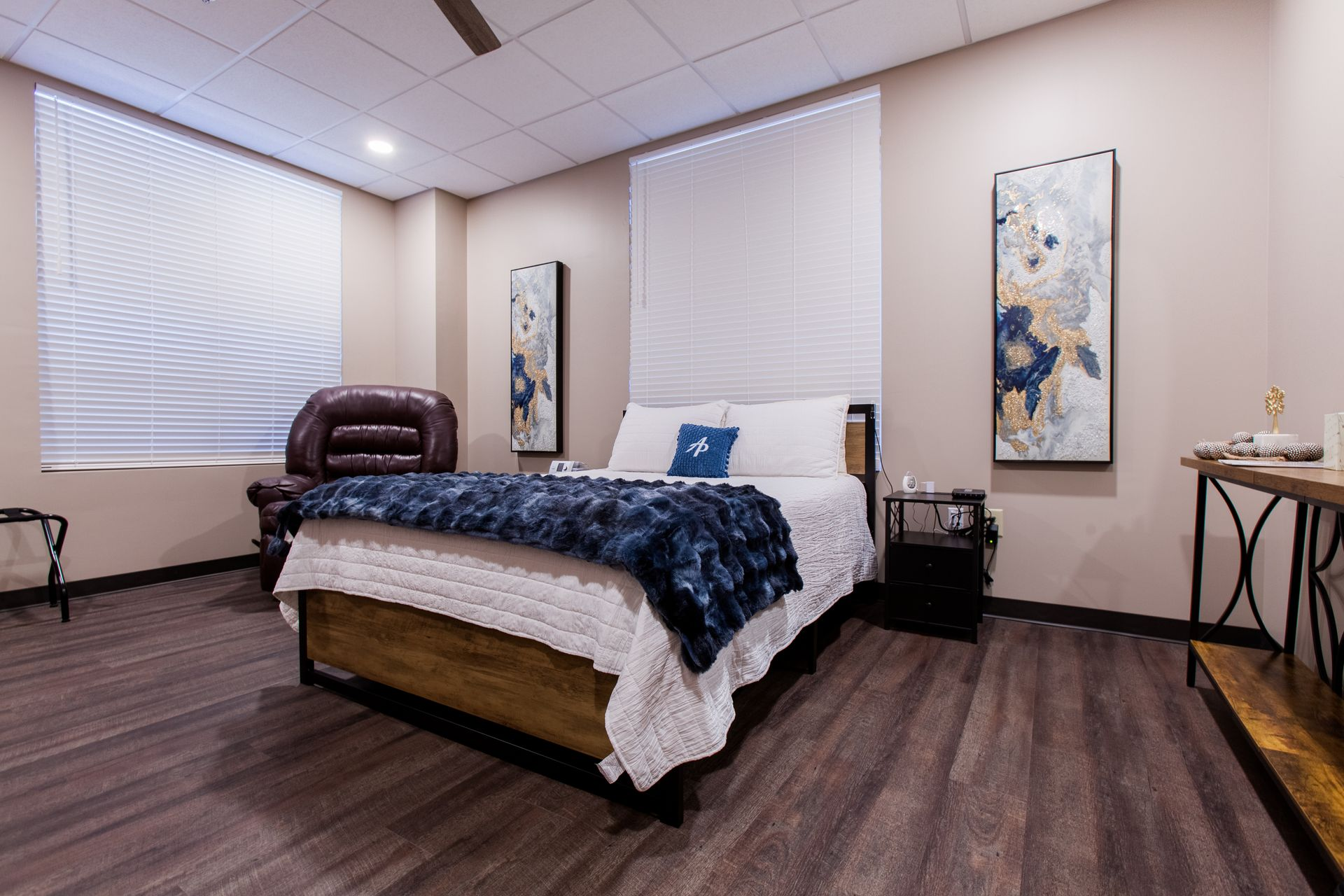
First, we talk. You describe your symptoms, and depending on what you say, we may not even need to send you to a video-adjacent lab experience — some patients qualify for a simplified sleep test they can do in the comfort of their own bed, no wires-to-a-machine-in-a-strange-room required. Other patients do a night at a formal sleep center, which I will describe honestly: you sleep in a room with roughly 40 wires attached to your head, chest, and legs, while someone in another room watches you sleep on a monitor, which sounds like the plot of a low-budget horror movie but is, in practice, just a very well-monitored nap.
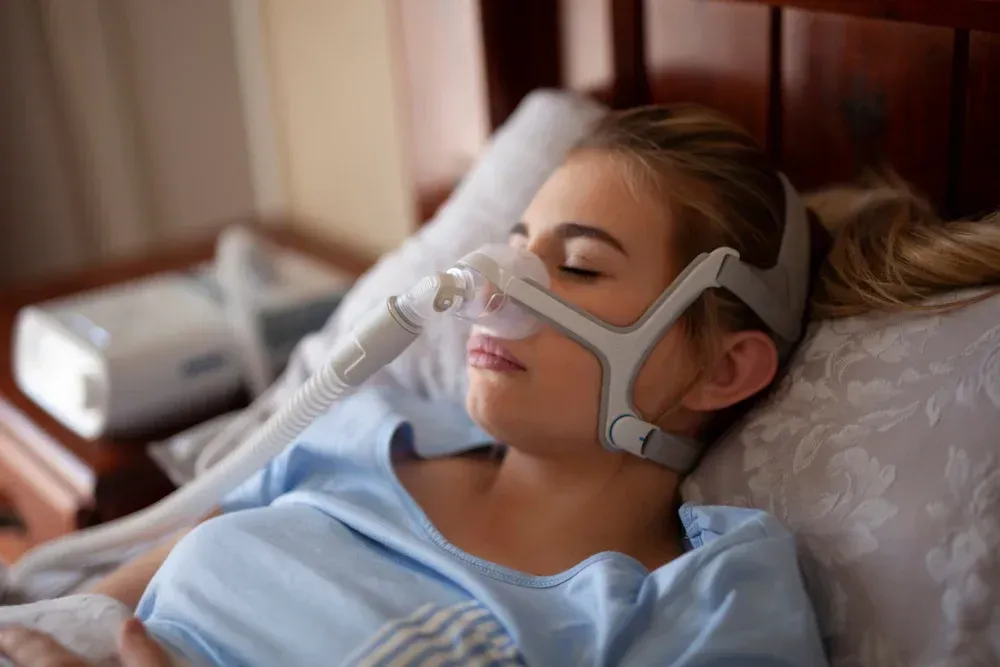
Either way, we get data: how many times you stop breathing, how low your oxygen drops, how your body reacts. From there, the most common and most effective treatment is something called CPAP — continuous positive airway pressure — which is a small machine that gently pushes air through a mask to keep your airway open all night. I will be honest with you: the first night with a CPAP machine feels a little like Darth Vader has moved into your bedroom. But most people adjust within a few weeks, and the payoff is enormous: real deep sleep, a functioning brain the next day, a partner who no longer sleeps with one eye open, and a body that isn't quietly working overtime against you.
For patients who don't tolerate CPAP well, there are other options too — oral appliances that reposition your jaw, lifestyle changes, and in some cases surgical approaches. Nobody gets handed one solution and told to make it work or go home. This is exactly the kind of thing our team is built to sort through with you.
The Part Where I Stop Making Jokes and Just Tell You the Truth
If someone who loves you has ever elbowed you awake, held up a phone, and said "listen to this," please don't laugh it off the way I did for entirely too long. Get it checked. It is a simple test, a manageable condition, and an enormous, quiet improvement to your health, your mornings, and your marriage.
My wife, for the record, still has that video. She has never once let me forget it.
But she also says I don't sound like a dump truck anymore.