
Thoracentesis
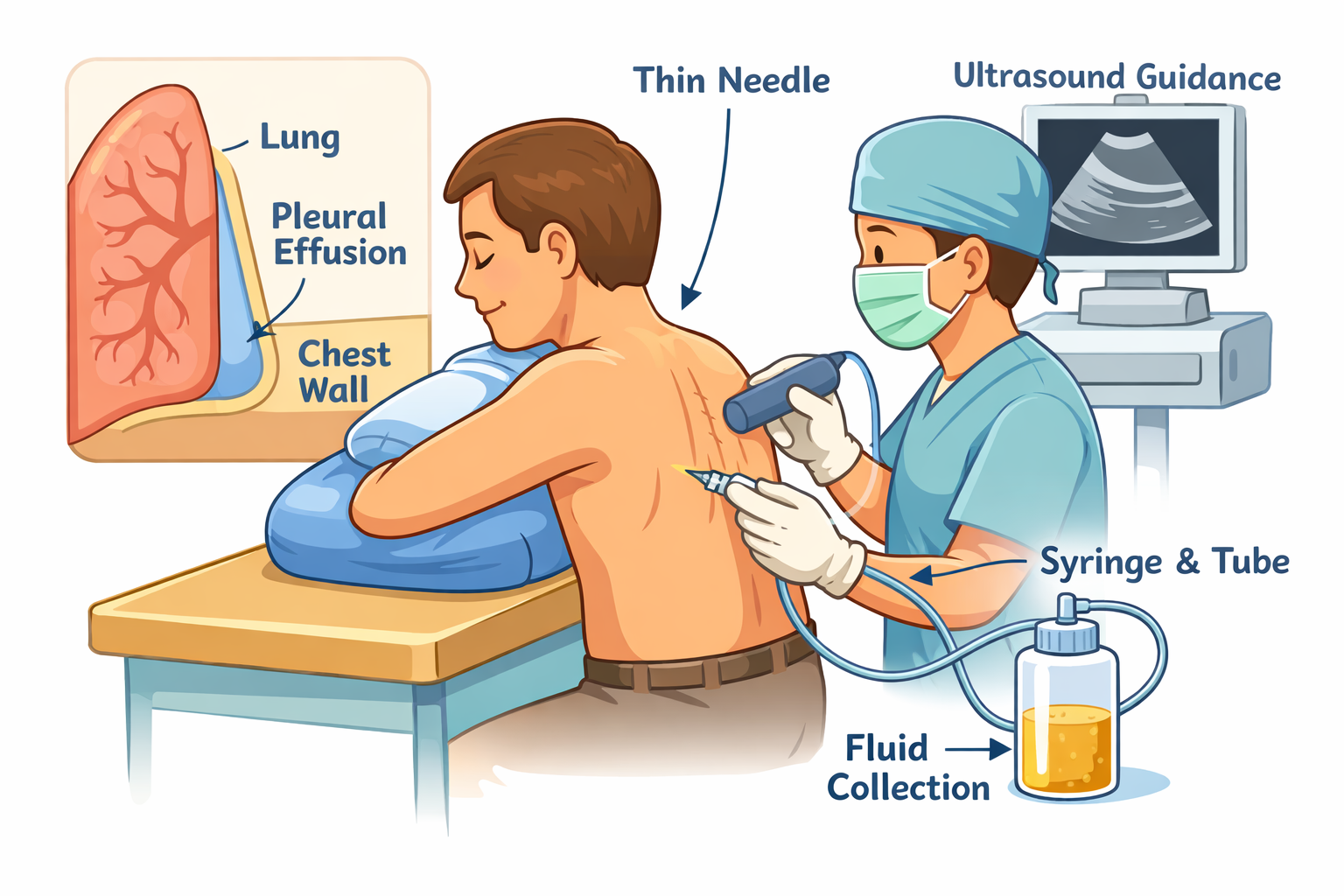
Thoracentesis is a minimally invasive procedure used to remove excess fluid from the space surrounding the lungs, known as the pleural space. The procedure can help relieve shortness of breath and chest discomfort while also allowing fluid to be analyzed to determine the underlying cause and guide appropriate treatment.
What is a Diagnostic Thoracentesis?
Diagnostic thoracentesis is performed to determine the cause of fluid buildup around the lungs, known as a pleural effusion. During the procedure, a small amount of fluid is carefully removed from the pleural space and sent to the laboratory for detailed analysis. This testing can help identify conditions such as infection, inflammation, heart or lung disease, or cancer. The information obtained from a diagnostic thoracentesis plays an important role in guiding further evaluation and treatment decisions.
Common Questions about Thoracentesis
Please review the commonly asked questions and let us know if your question is not answered in this section. Use the button below to submit your question directly from our website.
1. What is thoracentesis?
Thoracentesis is a procedure used to remove fluid from the space around the lungs to help relieve symptoms and/or determine the cause of the fluid buildup.
2. Why might I need a thoracentesis?
It is performed to evaluate unexplained fluid around the lungs or to improve breathing when fluid buildup causes shortness of breath or discomfort.
3. Does the procedure hurt?
Most patients feel pressure rather than pain. A local anesthetic is used to numb the area, and discomfort is usually brief and mild.
4. How long does the procedure take?
The procedure itself typically takes about 10–20 minutes, though you may spend additional time before and after for preparation and monitoring.
5. What are the risks of thoracentesis?
Thoracentesis is generally safe, but possible risks include bleeding, infection, or lung collapse (pneumothorax). Serious complications are uncommon when the procedure is performed carefully.