
Overnight Oximetry
Overnight oximetry is a simple, non-invasive test that continuously monitors oxygen levels and heart rate while you sleep in your own bed. The results help our clinicians identify nighttime oxygen drops, breathing irregularities, and the need for further testing or treatment.
Overnight Oximetry Testing
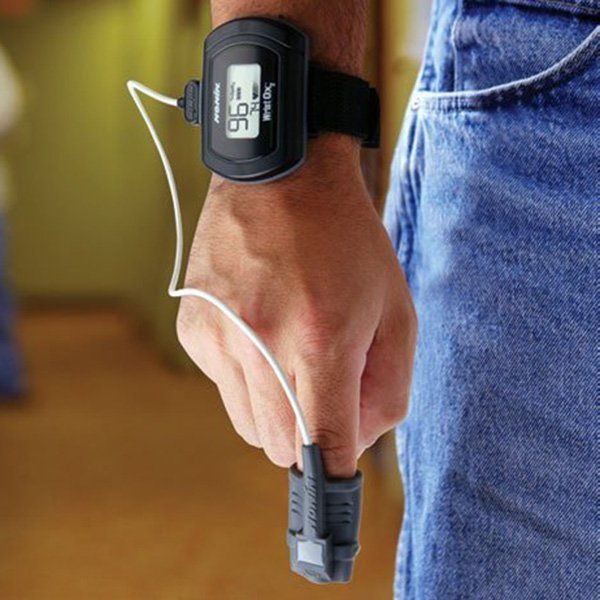
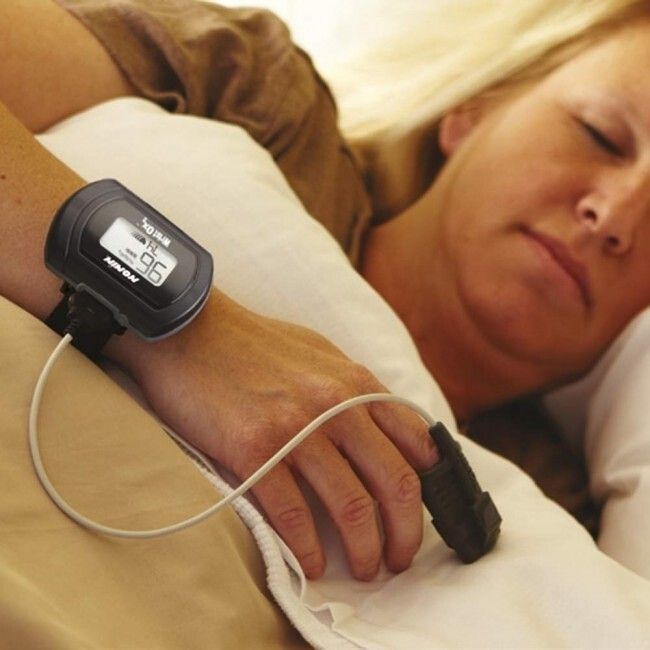
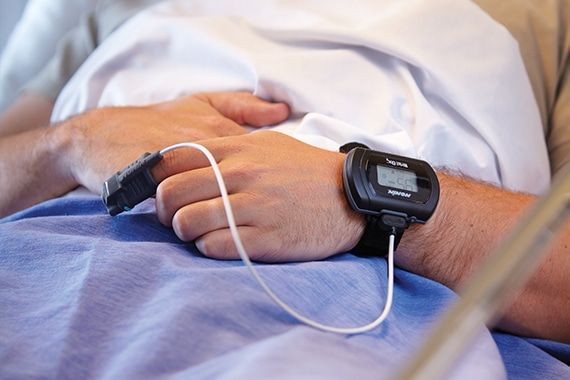
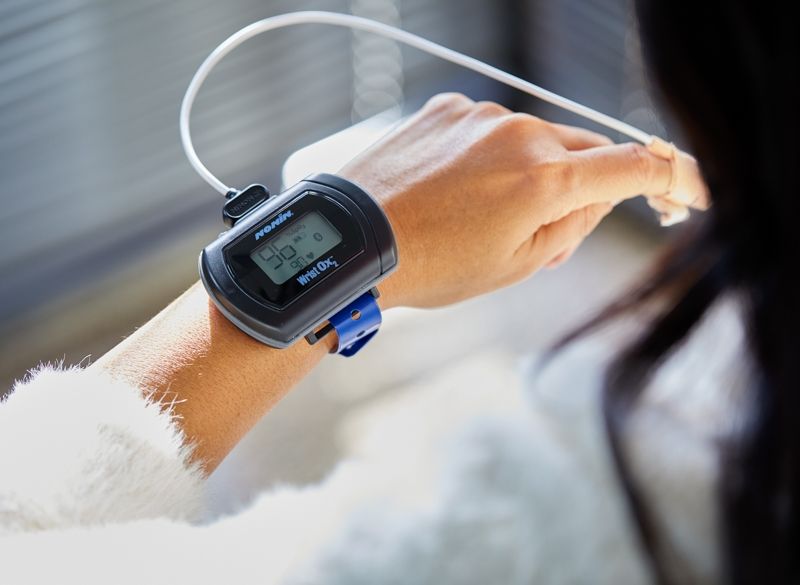
An overnight oximetry test using the Nonin WristOx® 3150 is performed to evaluate oxygen levels and heart rate while you sleep, helping identify nighttime oxygen drops that may be related to sleep-disordered breathing or lung conditions. The device consists of a small wrist-worn monitor connected to a soft finger sensor that continuously measures oxygen saturation and pulse throughout the night. Before bedtime, the sensor is placed on the finger and the wrist unit is secured comfortably, allowing you to sleep in your usual environment with minimal disruption. In the morning, the device is returned to our office, where the recorded data is reviewed by our clinical team to assess oxygen trends and determine whether additional testing or treatment may be needed.
Evaluate the Need for Oxygen at Night
Overnight oximetry is commonly used to determine whether a patient may need supplemental oxygen during sleep. By continuously monitoring oxygen levels throughout the night, the test helps identify sustained or repeated drops in oxygen saturation that occur while sleeping. These results allow our clinicians to assess whether oxygen levels fall below recommended thresholds, how often this occurs, and for how long. This information is essential for determining the medical necessity of nocturnal oxygen therapy and for guiding appropriate treatment decisions to support safe and effective nighttime breathing.
Evaluate Oxygen Levels with CPAP Therapy
Overnight oximetry is often used to evaluate whether a patient using CPAP therapy may also require supplemental oxygen during sleep. While CPAP effectively treats airway obstruction, some patients may continue to experience low oxygen levels at night due to underlying lung or cardiac conditions. By monitoring oxygen saturation while the patient uses their CPAP, overnight oximetry helps determine whether oxygen levels remain stable or drop below recommended thresholds. These results allow our clinicians to assess the effectiveness of CPAP therapy and determine if adding supplemental oxygen is medically necessary to ensure adequate nighttime oxygenation.